
How to Plan a Walking Route Through New Streets
A simple method for planning walks that avoid repeated routes and help you explore more of your city.
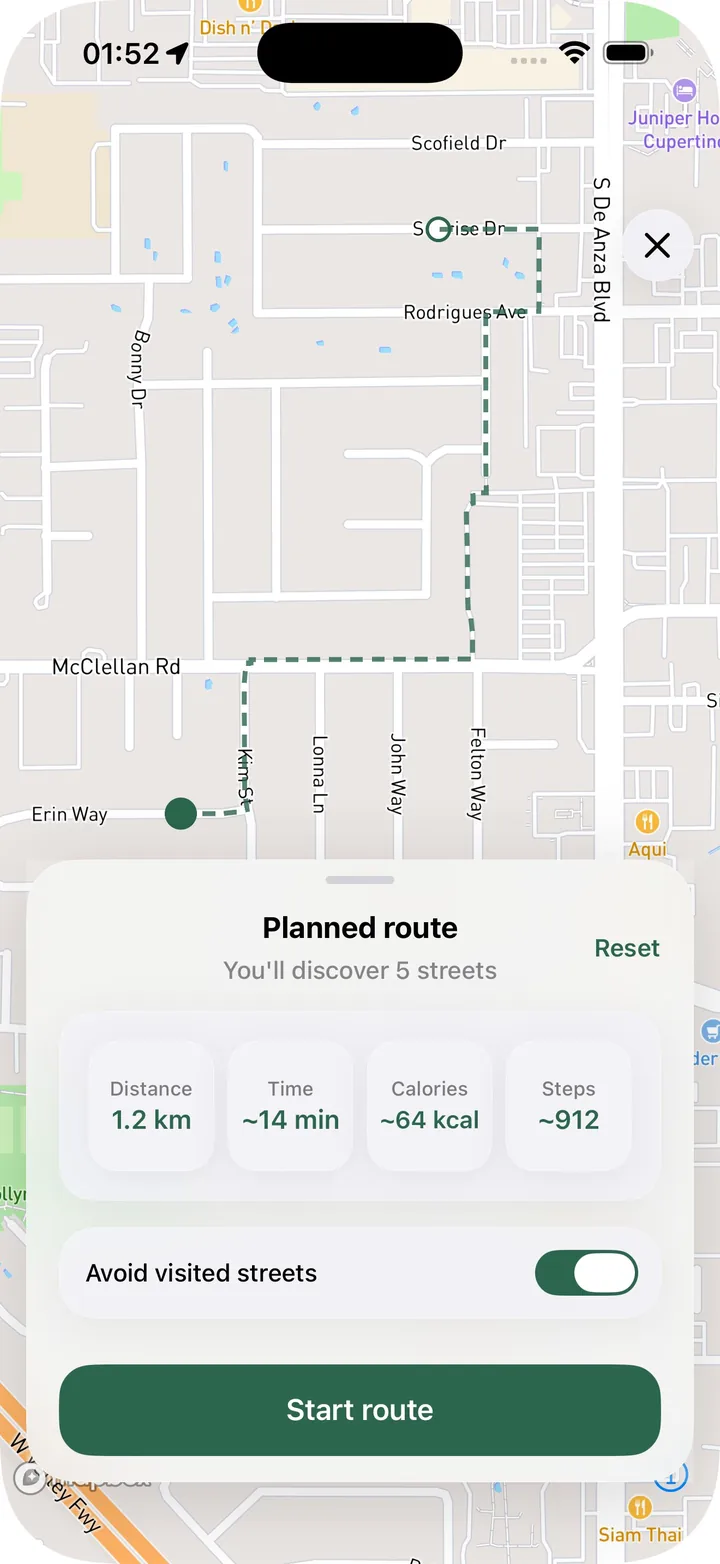
The easiest way to make a walk more interesting is to change the streets you use. You don’t need a complicated itinerary. You only need a destination, a few unvisited streets, and enough flexibility to enjoy the route.
Streets helps by showing what you have already explored. That makes it easier to plan a walking route that includes new streets instead of repeating the same familiar loop.
Pick a small target area
Start with an area that is close enough to reach comfortably. It might be a few blocks beyond your usual route, the other side of a park, or a neighborhood you pass but rarely enter.
Small target areas work well because they are realistic. You can explore them during a normal walk without turning the route into a long project.
Connect familiar streets with new ones
A good exploratory route often starts on familiar streets, moves through new ones, and returns by a different path. This keeps the walk comfortable while still adding discovery.
Use the walking route planner feature to avoid streets you have already covered and choose a path that adds something new to your city progress.
Leave room for changes
The best walking routes are not always perfect in advance. You may find a quieter street, a better crossing, or a small detour that looks more interesting.
Plan enough to give the walk direction, but leave enough room to follow what you see. Streets will still record the route and update your progress afterward.
Keep routes easy to repeat
If the route is too hard, you may not use it again. A good walking route should fit your real life: available time, weather, energy, and where you need to end up.
Try planning routes that are 20 to 45 minutes long. That is often enough time to explore several new streets without making the walk feel like a chore.
Review and adjust
After the walk, check what changed. Did you cover the streets you planned? Did the route feel pleasant? Did you find a new area worth returning to?
Use that review to plan the next walk. The map becomes better every time because it remembers where you have already been.