
How to Stop Walking the Same Route Every Day
Use visited streets, route review, and small planning habits to make everyday walks feel new again.
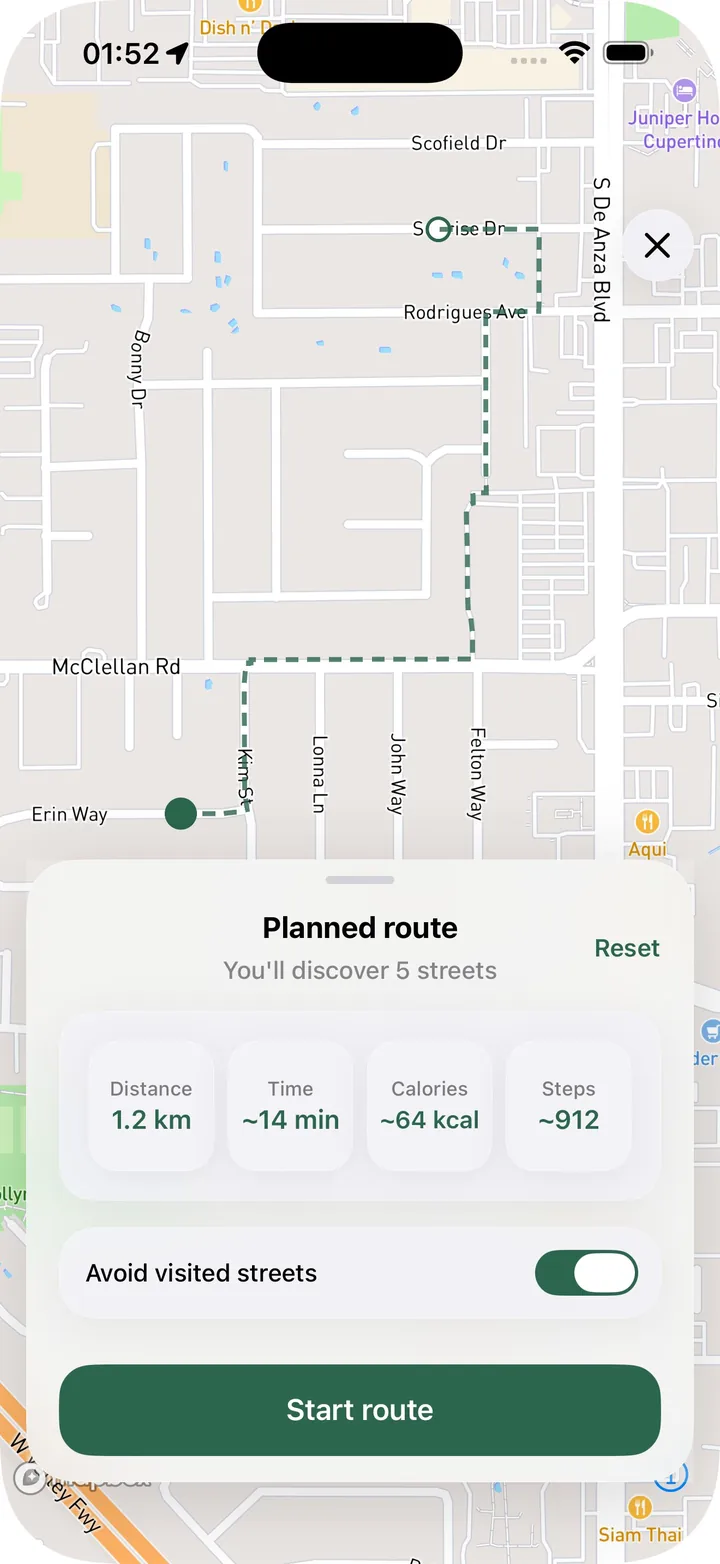
Most people repeat walking routes without noticing. The same shortcut, the same loop, the same side of the park. Repetition is easy because it removes decisions.
But if you want walks to feel new again, you need a simple way to choose different streets. Streets helps by showing where you’ve already walked and where you can still explore.
Find your repeated pattern
Start by tracking a few normal walks. Do not change anything yet. Just record the routes and look at the map afterward.
You may see that you always turn at the same corner or use the same few streets to get home. Once the pattern is visible, it becomes easier to change.
Choose one alternate block
You don’t need to redesign the whole route. Pick one block you usually skip and add it to the walk. A small change can make the route feel different without making it inconvenient.
Over time, these small changes add up. The map grows, and your default walking options expand.
Plan around streets you haven’t visited
When you have more time, choose a route that connects several unvisited streets. This gives the walk a purpose and helps avoid the automatic loop.
The route doesn’t need to be perfect. It only needs to move through new places and get you back comfortably.
Keep one familiar anchor
Exploring is easier when part of the walk is familiar. Use a known park, cafe, transit stop, or street as an anchor, then vary the path around it.
This keeps the walk comfortable while still adding discovery.
Let the map suggest the next walk
After each route, check your progress. The unvisited streets nearby are often the best suggestion for tomorrow.
When the map remembers what you’ve walked, you don’t have to invent a new route from scratch. You can simply follow the gaps.